
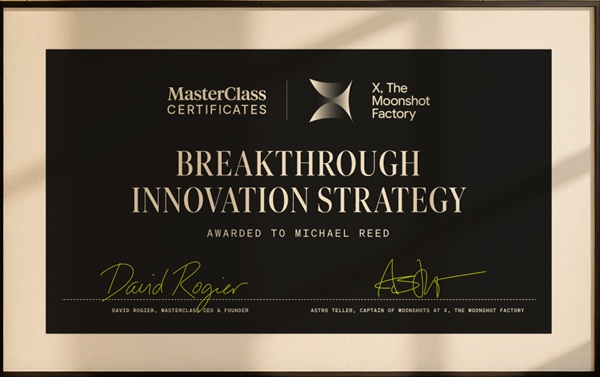
[Group Buy] Masterclass certificate – Breakthrough Innovation Strategy
$59.00
- Delivery: You Will Receive A Receipt With Download Link Through Email.
- If you need more proof ofcourse, feel free to chat with me!

Description
Breakthrough Innovation Strategy – From Bold Idea to Business Impact
The Breakthrough Innovation Strategy is not merely a buzzword; it’s a meticulously crafted approach to transforming audacious concepts into tangible, market-disrupting realities. It encompasses a systematic process of ideation, development, and execution, designed to navigate the inherent uncertainties of pioneering new frontiers and deliver significant real-world impact. This strategic framework is essential for any organization aiming to stay ahead in a rapidly evolving global landscape.
Introduction to Breakthrough Innovation Strategy
Breakthrough innovation is more than just incremental improvement; it’s about reimagining possibilities and creating entirely new paradigms. It requires a unique blend of foresight, courage, and a structured approach to transform nascent ideas into revolutionary products, services, or business models. Understanding and implementing a robust Breakthrough Innovation Strategy is paramount for sustained competitive advantage.
Defining Breakthrough Innovation and Its Significance
Breakthrough innovation stands apart from continuous improvement or even radical innovation by its sheer scale of impact and its ability to redefine markets or even create entirely new ones. It’s about generating solutions that were previously unimaginable, fundamentally altering how we live, work, and interact. The significance of such innovation cannot be overstated; it drives economic growth, solves pressing global challenges, and pushes the boundaries of human achievement. Organizations that master this art are not just participants in their respective industries; they are architects of the future. It’s a journey from a bold idea to a transformative business impact, demanding a profound shift in mindset and operational execution. The true power lies not just in the “what” of the innovation, but in the “how” – the strategic process that brings it to fruition.
This type of innovation often involves significant risk, but the rewards are commensurately large. It’s about envisioning a future that doesn’t yet exist and then systematically working backward to build it. This necessitates a culture that embraces experimentation, tolerates failure as a learning opportunity, and constantly seeks out unconventional solutions. Without a clear understanding of what constitutes breakthrough innovation and its profound implications, organizations risk being relegated to observing from the sidelines as others reshape the landscape.
The Role of the X Factor in Transformational Ideas
The x factor in transformational ideas is that elusive, often indefinable quality that separates a merely good idea from a truly groundbreaking one. It’s the spark of genius, the unexpected insight, or the audacious leap of faith that propels an idea beyond the conventional. This x factor isn’t always quantifiable or predictable, but it’s unmistakably present in every significant breakthrough. It often stems from a deep understanding of unmet needs, a novel combination of existing technologies, or a radical reinterpretation of a problem. Cultivating an environment where this x factor can emerge is a critical component of any successful innovation strategy. It’s about empowering individuals to think differently, challenge assumptions, and pursue avenues that might initially seem unconventional.
Identifying and nurturing this x factor involves more than just brainstorming sessions. It requires profound empathy for users, a keen eye for nascent trends, and an unwavering commitment to exploring uncharted territories. The x factor often resides at the intersection of diverse disciplines, where unexpected connections can be made. It’s the moment when a seemingly unrelated piece of information suddenly unlocks a novel solution, transforming a complex challenge into an exciting opportunity. Organizations must actively seek to foster conditions where these serendipitous “aha!” moments are not just possible, but encouraged and supported.
Overview of Key Concepts: Innovation Strategy and Innovative Ideas
An effective innovation strategy provides the roadmap for an organization to consistently generate and implement innovative ideas. It’s not a static document but a living framework that guides resource allocation, talent development, and cultural norms to support sustained innovation. This strategy defines the areas of focus, the methods for idea generation, the criteria for selection, and the processes for development and commercialization. Without a clear strategy, even the most brilliant innovative ideas can falter due to lack of direction, resources, or organizational buy-in. It’s about building a robust engine for innovation, ensuring that creativity is channeled effectively towards tangible outcomes.

The interplay between innovation strategy and innovative ideas is symbiotic. A well-defined strategy inspires and directs the generation of relevant and impactful ideas, while a consistent flow of groundbreaking ideas can, in turn, refine and strengthen the strategy. This continuous feedback loop ensures that the organization remains agile and responsive to both internal capabilities and external market dynamics. It’s about moving beyond ad-hoc experimentation to a systematic and strategic pursuit of novelty, aligning every effort with overarching business objectives and a vision for future growth.
Foundations of Innovation at Astro Lab and Wing Zero Blueprint
The journey from a bold concept to a demonstrable impact often draws inspiration from dedicated innovation hubs and meticulously designed frameworks. Entities like Astro Lab and the Wing Zero Blueprint exemplify how structured environments and disciplined methodologies can serve as fertile ground for nurturing groundbreaking innovations. Their approaches offer invaluable lessons for any organization striving to build a robust Breakthrough Innovation Strategy.
Astro Lab’s Approach to Cutting-Edge Technologies
Astro Lab, while a conceptual construct in this context, embodies the ideal of a dedicated innovation hub focused on pushing the boundaries of scientific and technological possibility. Its approach would be characterized by a relentless pursuit of cutting-edge technologies, often with a long-term horizon and a high tolerance for experimental failure. The core philosophy at Astro Lab would center on foundational research, interdisciplinary collaboration, and the rapid prototyping of novel solutions. It wouldn’t be constrained by immediate market demands but driven by a vision of what could be, exploring technologies that might seem futuristic today but hold the potential to redefine tomorrow. This strategic dedication to fundamental advancements is crucial for developing truly transformative capabilities, acting as a wellspring for future innovative ideas.
Such an environment thrives on intellectual curiosity and a deep commitment to scientific rigor. Personnel at Astro Lab would likely be composed of diverse experts from various scientific and engineering disciplines, fostering a rich cross-pollination of ideas. The infrastructure would be designed to support advanced experimentation, with high-tech laboratories, specialized equipment, and robust data analysis capabilities. The output of Astro Lab wouldn’t necessarily be market-ready products, but rather foundational knowledge, proof-of-concept prototypes, and novel technological building blocks that can later be leveraged for commercial application, providing the essential ingredients for a sophisticated business innovation strategy.
The Wing Zero Blueprint: A Model for Revolutionary Design
The Wing Zero Blueprint, another conceptual framework, represents a systematic and rigorous approach to revolutionary design, emphasizing clarity of vision, iterative development, and a strong user-centric focus. It’s a methodology for translating ambitious concepts into detailed, actionable plans, ensuring that every design decision serves a greater, transformative purpose. This blueprint would outline a phased approach, beginning with deep problem definition, moving through radical ideation, and culminating in the meticulous engineering of solutions that are not just innovative but also highly functional and impactful. It champions a design philosophy that questions norms and seeks to create entirely new categories of products or experiences, serving as a powerful engine for generating innovative ideas.
Central to the Wing Zero Blueprint would be a strong emphasis on continuous feedback loops and agile development principles. Designs would not be static but would evolve through constant testing, refinement, and adaptation based on real-world insights. This iterative process allows for the early identification and mitigation of potential flaws, ensuring that the final product or solution is not only groundbreaking but also robust and user-friendly. The blueprint would also likely incorporate principles of sustainable design and ethical considerations, ensuring that revolutionary innovations contribute positively to society as a whole, making it a critical component of a comprehensive innovation strategy.
Bridging Laboratory Innovation with Real-World Application
The critical challenge for any organization engaged in deep research and radical design, like Astro Lab or those employing the Wing Zero Blueprint, is effectively bridging the gap between laboratory innovation and real-world application. It’s not enough to simply develop groundbreaking technologies or designs; they must be successfully translated into products, services, or processes that deliver tangible value to users and markets. This translation requires a dedicated strategy for commercialization, involving market research, strategic partnerships, and robust product development pipelines. It’s about moving beyond the theoretical and proving the practical utility and impact of the innovation, demonstrating the true power of a Breakthrough Innovation Strategy.
This bridging process often involves significant organizational capabilities, including strong project management, effective communication between research and business units, and a clear understanding of market dynamics. It requires a willingness to adapt and refine innovations based on real-world feedback, acknowledging that the initial concept may need to evolve significantly to achieve market success. Ultimately, the goal is to ensure that the scientific breakthroughs and revolutionary designs cultivated in the lab don’t remain academic curiosities but become powerful tools for societal and economic advancement, making the transition from a bold idea to a business impact a seamless and successful one.
Integrating Google Leadership Principles into Innovation
The culture and operational philosophy of leading innovation powerhouses offer profound insights into fostering an environment ripe for groundbreaking ideas. Google, with its renowned “Moonshot Factory” (now Alphabet’s X Development LLC), exemplifies how deeply embedded leadership principles can serve as the bedrock for an exceptional Breakthrough Innovation Strategy. These principles extend beyond mere management tactics; they are woven into the fabric of daily operations, guiding decisions, shaping interactions, and ultimately fueling the relentless pursuit of the next big thing.
Core Values Driving Innovation at Google
Google’s innovation engine is powered by a set of core values that emphasize user focus, rapid iteration, and a healthy disregard for the impossible. “Focus on the user and all else will follow” is perhaps its most famous mantra, ensuring that all innovative ideas are rooted in solving real-world problems for real people. This principle drives empathy in design and development, pushing teams to understand needs deeply before crafting solutions. Another crucial value is “It’s best to do one thing really, really well,” which, paradoxically, encourages audacious focus on specific, challenging problems rather than spreading resources too thin. This concentration fosters depth of expertise and allows for the development of truly superior solutions, critical for any effective innovation strategy.
Furthermore, Google’s embrace of experimentation, epitomized by its “launch and iterate” philosophy, allows for rapid testing and refinement of ideas. This approach acknowledges that not every idea will succeed, but every attempt provides valuable learning. The principle of “fast is better than slow” encourages quick decision-making and agile development cycles, preventing stagnation and maintaining momentum. These values collectively create a dynamic environment where creativity is unleashed, risks are managed, and ambitious goals are pursued with unwavering dedication, laying the groundwork for a robust Breakthrough Innovation Strategy.
Applying Leadership Principles to Cultivate an Innovative Culture
Applying Google’s leadership principles to cultivate an innovative culture involves more than just reciting slogans; it requires deliberate structural and behavioral changes within an organization. Leaders must actively model these values, demonstrating a willingness to take calculated risks, empowering their teams, and fostering an environment of psychological safety where failure is seen as a learning opportunity rather than a punitive event. This means encouraging diverse perspectives, challenging conventional wisdom, and actively listening to ideas from all levels of the organization. The principle of “don’t be evil” also plays a subtle yet significant role, ensuring that innovation is pursued responsibly and ethically, building trust and long-term sustainability.
Cultivating such a culture demands a shift from top-down directives to a more decentralized, collaborative approach. Leaders act as enablers, providing resources, removing obstacles, and championing promising innovative ideas. They understand that true breakthroughs often emerge from unexpected places and that rigid hierarchies can stifle creativity. Implementing structures like “20% time” (though its direct application has evolved) or internal incubators can provide dedicated space for employees to explore their own bold ideas, fostering a sense of ownership and entrepreneurial spirit. This intentional cultivation of an innovation-centric culture is a key pillar of any successful innovation strategy.
Case Studies of Leadership-Driven Breakthroughs
Numerous examples illustrate how Google’s leadership principles have directly led to significant breakthroughs. The development of Gmail, for instance, which offered unprecedented storage capacity at a time when email services were severely limited, was a direct outcome of challenging existing norms and focusing on an unmet user need. Its “beta forever” approach exemplified rapid iteration and continuous improvement, driven by user feedback. Similarly, Google Maps revolutionized navigation by integrating diverse data sources and prioritizing user experience, emerging from a culture that encourages ambitious projects and leverages vast technological capabilities. These aren’t just product successes; they are triumphs of a leadership philosophy that empowers teams to aim for the seemingly impossible.
Another compelling case is the evolution of Google’s search algorithm itself, a continuous Breakthrough Innovation Strategy. Driven by a relentless focus on providing the most relevant information to users, leaders consistently pushed teams to develop more sophisticated ranking systems, incorporate new data types, and anticipate user intent. This ongoing innovation, guided by the core values, has maintained Google’s dominance in a highly competitive space. These case studies underscore the critical role of visionary leadership in not only conceiving innovative ideas but also in nurturing the environment and providing the sustained support necessary to bring them to fruition, demonstrating how a bold idea can indeed lead to business impact.
Project Moonshot: Pioneering Ambitious Goals
The concept of a “moonshot” has become synonymous with audacious, highly ambitious projects that aim for a ten-fold improvement rather than a mere ten percent. Project Moonshot is not just about setting big goals; it’s a philosophy, a methodology, and a cultural imperative that drives truly transformative innovation. Originating from Google’s X (The Moonshot Factory), it embodies the pinnacle of Breakthrough Innovation Strategy, challenging conventional wisdom and pushing the boundaries of what is thought possible.
Origins and Philosophy Behind Project Moonshot
The origins of Project Moonshot within Google’s X are rooted in the belief that true innovation requires tackling huge problems, proposing radical solutions, and leveraging breakthrough technologies. The philosophy is encapsulated in the “10x thinking” mindset: instead of incremental improvements, teams are encouraged to aim for solutions that are ten times better than existing ones. This seemingly extreme goal actually simplifies the problem-solving process by rendering conventional approaches obsolete, forcing truly creative and unconventional thinking. The name itself harkens back to the Apollo 11 mission – an endeavor once deemed impossible, yet achieved through audacious vision and relentless effort.
This philosophy also embraces a strategic approach to failure. In a moonshot project, early failures are not just tolerated but actively sought out, as they provide critical learning opportunities and help quickly identify non-viable paths. The focus is on rapid experimentation and iteration, with the understanding that many attempts will not succeed, but the few that do will have an outsized impact. This culture of intelligent risk-taking, combined with a long-term perspective, forms the bedrock of the Project Moonshot philosophy, making it a distinctive element of any effective innovation strategy.
Strategic Framework for Setting and Achieving Moonshot Goals
The strategic framework for setting and achieving moonshot goals is highly structured, despite the seemingly chaotic nature of radical innovation. It typically involves three key components: identifying a huge problem that affects millions or billions of people, proposing a radical solution that uses existing or nascent technologies in entirely new ways, and leveraging breakthrough technology that makes the radical solution feasible. The process begins with rigorous problem validation, ensuring that the chosen challenge is genuinely significant and impactful. Once a problem is defined, teams engage in unconstrained ideation, exploring every conceivable solution without initial limitations.
Following ideation, a crucial phase involves rapid prototyping and testing of the most promising innovative ideas. This phase is characterized by constant experimentation, data collection, and learning, often leading to pivots or even the abandonment of initial concepts. The framework emphasizes a “fail fast, learn faster” mantra, ensuring that resources are not poured into unviable avenues for too long. Throughout, cross-functional teams with diverse expertise are crucial, fostering a holistic approach to problem-solving. This disciplined, yet flexible, framework is what allows Project Moonshot to consistently develop world-changing inventions, making it a powerful example of business innovation strategy in action.
Lessons Learned from Past Moonshot Initiatives
Past moonshot initiatives, both successful and those that did not fully materialize, offer invaluable lessons for any organization aspiring to implement a Breakthrough Innovation Strategy. One primary lesson is the importance of perseverance and resilience in the face of immense technical and operational challenges. Projects like Waymo (self-driving cars) and Wing (drone delivery) have demonstrated the protracted timelines and significant investment required to bring truly complex, world-altering technologies to fruition. These projects underscore that breakthroughs are rarely instantaneous and often demand sustained dedication over many years.
Another key lesson is the critical role of interdisciplinary collaboration and external partnerships. Moonshots often require expertise across a vast array of scientific and engineering fields, making collaboration essential. Furthermore, the ability to pivot and adapt is paramount. Some moonshots, while not achieving their initial grand vision, have yielded valuable spin-off technologies or insights that have found application in other areas. This highlights the importance of extracting maximum learning from every endeavor, regardless of its ultimate outcome, reinforcing the iterative nature of a successful innovation strategy. The experience from these initiatives proves that the journey from bold idea to business impact is rarely linear, but always enriching.
Developing a Business Innovation Strategy
A robust business innovation strategy is the compass that guides an organization through the uncharted waters of creating future value. It’s not merely a desire to be innovative but a deliberate, systematic approach that integrates innovation into the core fabric of business operations, ensuring that creative efforts align with strategic objectives and deliver measurable impact. This strategy is essential for translating Breakthrough Innovation Strategy principles into sustainable commercial success.
Aligning Innovation with Business Objectives
The cornerstone of an effective business innovation strategy is the clear alignment of all innovation efforts with overarching business objectives. Innovation for innovation’s sake can be a costly distraction; instead, every innovative idea and project should contribute directly to strategic goals such, as market expansion, cost reduction, customer acquisition, or the creation of new revenue streams. This alignment requires a deep understanding of the organization’s vision, mission, and competitive landscape. Leaders must articulate a clear innovation mandate that is understood across all departments, guiding where resources are allocated and which ideas are prioritized.
This alignment also involves establishing clear metrics for success. How will the impact of innovation be measured? Is it through new product launches, increased market share, improved operational efficiency, or enhanced customer satisfaction? By defining these success indicators upfront, organizations can ensure that their innovation portfolio is strategically focused and that investments yield tangible returns, reinforcing the practical application of a Breakthrough Innovation Strategy. This strategic coherence ensures that innovation is not an isolated function but an integrated driver of business growth and resilience.
Tools and Frameworks for Mapping Innovation Pathways
To effectively execute a business innovation strategy, organizations employ a variety of tools and frameworks designed to map innovation pathways from ideation to commercialization. These can include innovation funnels, stage-gate processes, design thinking methodologies, and lean startup principles. Innovation funnels help manage a diverse portfolio of innovative ideas, allowing for early-stage exploration of many concepts while progressively narrowing down to the most promising few. Stage-gate processes provide structured checkpoints for decision-making, ensuring that projects meet predefined criteria before advancing to the next phase, mitigating risk and optimizing resource allocation.
Design thinking, with its emphasis on empathy, ideation, prototyping, and testing, ensures that innovation is human-centered and addresses real user needs. Lean startup methodologies advocate for rapid experimentation and validated learning, allowing organizations to quickly test assumptions and pivot when necessary, minimizing wasted effort. Tools like technology roadmaps and foresight exercises also help anticipate future trends and identify strategic areas for investment. Leveraging these frameworks systematically allows organizations to navigate the complexities of innovation, ensuring a structured approach to generating and delivering a bold idea to business impact.
Managing Uncertainty and Risk in Innovation Projects
Innovation inherently involves uncertainty and risk, particularly when pursuing breakthrough initiatives. A robust business innovation strategy must incorporate mechanisms for effectively managing these challenges. This includes developing a diversified portfolio of innovation projects, balancing high-risk, high-reward ventures (like Project Moonshot endeavors) with more incremental, lower-risk improvements. This portfolio approach helps cushion the impact of potential failures in any single project, ensuring overall organizational resilience. Risk mitigation strategies also involve clear go/no-go decision points, allowing organizations to terminate unviable projects early.
Furthermore, fostering a culture of psychological safety is critical. Employees must feel empowered to experiment, fail, and learn without fear of severe repercussions. This encourages transparent communication about challenges and allows for early detection of potential problems. Scenario planning and contingency development are also vital, preparing the organization for various potential outcomes and market shifts. By proactively addressing uncertainty and intelligently managing risk, organizations can pursue ambitious innovative ideas with greater confidence, transforming potential pitfalls into opportunities for learning and growth, ensuring the success of their Breakthrough Innovation Strategy.
Harnessing the Power of the X Factor and Innovative Ideas
The elusive x factor – that unique differentiator that elevates an idea from good to revolutionary – is often the catalyst for market disruption. Coupled with a steady stream of truly innovative ideas, it forms the core of a potent Breakthrough Innovation Strategy. Harnessing this power requires a deliberate and structured approach, moving beyond serendipity to create an environment where disruptive concepts are not just welcomed, but actively cultivated and systematically brought to fruition.
Identifying and Cultivating Unique Differentiators
Identifying the x factor often begins with a deep, almost anthropological understanding of customer needs, market gaps, or technological possibilities that others have overlooked. It’s about seeing beyond the obvious, questioning assumptions, and challenging established norms. Cultivating this unique differentiator within an organization involves fostering a culture of curiosity, critical thinking, and relentless inquiry. It means encouraging employees to explore adjacent fields, engage with diverse perspectives, and constantly seek out novel connections between seemingly unrelated concepts. This isn’t a passive process; it requires active leadership in promoting intellectual diversity and providing the psychological safety for unconventional thinking.
Furthermore, organizations can cultivate the x factor by investing in foundational research and development, allowing space for blue-sky thinking without immediate commercial pressures. It’s also about empowering individuals or small teams with autonomy to pursue promising leads, even if they initially seem niche or unconventional. The goal is to build an internal capability to not just identify but actively nurture these unique differentiators until they are robust enough to form the basis of a truly disruptive Breakthrough Innovation Strategy. This deep understanding and cultivation of uniqueness is what truly sets apart market leaders.
Strategies for Generating Disruptive Ideas
Generating disruptive innovative ideas requires moving beyond conventional brainstorming and embracing methodologies that actively promote radical thinking. Techniques like “ideation sprints,” “future-back thinking,” and “analogy thinking” can be particularly effective. Ideation sprints, often time-boxed and highly focused, force rapid concept generation and iteration, preventing analysis paralysis. Future-back thinking encourages teams to envision a desired future state and then work backward to identify the innovations needed to get there, challenging present-day constraints. Analogy thinking involves drawing inspiration from unrelated industries or domains to solve problems in novel ways, often leading to unexpected breakthroughs.
Another powerful strategy is to actively seek out “edge cases” or “fringe users” – those whose needs are not met by mainstream solutions. Solving for these extreme users often uncovers insights that can lead to universally applicable, disruptive innovations. Establishing cross-functional teams with diverse backgrounds, skills, and perspectives is also crucial, as varied viewpoints are more likely to challenge assumptions and generate truly novel solutions. Ultimately, the goal is to create a perpetual motion machine for innovative ideas, ensuring a continuous pipeline for the Breakthrough Innovation Strategy.
Turning Ideas into Actionable Business Plans
Having a plethora of disruptive innovative ideas is only the first step; the true challenge lies in transforming them into actionable business innovation strategy plans. This involves a rigorous process of validation, prioritization, and detailed planning. Validation means testing the core assumptions of an idea with potential users or market segments to ensure there’s a genuine need and willingness to adopt the solution. This often involves low-fidelity prototyping, user interviews, and market experiments to gather empirical evidence. Ideas that lack validation, regardless of their initial brilliance, should be reconsidered or shelved to avoid wasted resources.
Prioritization is critical, as not all ideas can be pursued simultaneously. This requires clear criteria for evaluating potential impact, feasibility, and strategic alignment. Tools like impact-effort matrices or weighted scoring models can help objectively rank ideas. Finally, developing an actionable business plan involves defining the target market, value proposition, revenue model, operational requirements, and key performance indicators. This plan should be iterative and adaptable, allowing for adjustments as new information emerges. The journey from a bold idea to business impact is paved with meticulous planning and agile execution, ensuring that the Breakthrough Innovation Strategy delivers tangible results.
Practical Application: Building and Showcasing Real-World Projects
The ultimate measure of any Breakthrough Innovation Strategy or business innovation strategy is its ability to produce tangible, real-world impact. This isn’t just about conceptual brilliance but about the meticulous execution of innovative ideas that translate into demonstrable value. For individuals and organizations alike, the creation and showcasing of real-world projects are paramount, serving as both a learning crucible and a powerful testament to acquired capabilities.
Designing Projects that Demonstrate Innovation Impact
Designing projects that effectively demonstrate innovation impact requires a strategic approach that goes beyond mere technical execution. Such projects should address a clearly defined problem, propose a novel solution, and ideally, provide measurable benefits. When undertaking a project as part of a course like “Breakthrough Innovation Strategy: From Bold Idea to Business Impact” from The Moonshot Factory, the emphasis would be on applying the learned frameworks to a challenge that resonates with your professional context or ambition. This means selecting a project that allows for the application of innovation strategy principles, from initial ideation to potential market validation.
The project design should articulate not just what was built, but why it was built and how it embodies breakthrough thinking. It should showcase the journey from a bold idea to a potential solution, highlighting the problem-solving process, the creative decisions made, and the anticipated impact. Whether it’s a new product concept, a process improvement, or a novel service offering, the project needs to clearly illustrate the application of an innovation strategy to generate and develop innovative ideas that address a significant challenge.
Portfolio Development for Career Advancement
For professionals, building a portfolio of real-world innovation projects is an invaluable asset for career advancement. A certificate, such as the “career proof” credential offered by The Moonshot Factory’s course, validates theoretical knowledge, but a robust portfolio provides concrete evidence of practical application and problem-solving abilities. Each project in the portfolio should tell a story: the initial challenge, the Breakthrough Innovation Strategy employed, the innovative ideas generated, the development process, and the measurable outcomes or potential impact.
This portfolio serves as a tangible demonstration of skills like strategic thinking, problem-solving, creativity, and project management. It allows individuals to move beyond simply stating they possess “in-demand skills” to actually proving them. For those looking to transition into innovation roles, lead new initiatives, or secure funding for their ventures, a well-curated portfolio is often more compelling than a traditional resume alone. It showcases a proactive approach to learning and applying business innovation strategy, turning personal ideas into potentially impactful ventures.
Communicating Value to Stakeholders and Investors
Successfully bringing an innovative project to fruition also hinges on the ability to effectively communicate its value to stakeholders and potential investors. This involves articulating the problem being solved, the uniqueness of the solution (the x factor), the market opportunity, and the potential for significant return on investment. The narrative should be compelling, clear, and concise, demonstrating a deep understanding of both the technical aspects of the innovation and its business innovation strategy implications.
When showcasing a real-world project, whether in a presentation or a written report, focus on the “so what?” factor. How does this innovation translate into tangible benefits for customers, the organization, or society? What is the competitive advantage? What are the next steps for development and scaling? Leveraging the frameworks learned in a comprehensive Breakthrough Innovation Strategy course can provide the language and structure needed to effectively convey this value, turning a brilliant idea into a compelling proposition that attracts support and resources.
The Role of Self-Paced Learning and Professional Development
In the fast-evolving landscape of innovation, continuous learning and professional development are not optional but essential. Self-paced courses, particularly those offered by cutting-edge organizations, play a pivotal role in equipping individuals with the knowledge and tools necessary to navigate and lead in this dynamic environment. The Moonshot Factory’s “Breakthrough Innovation Strategy” course exemplifies this, offering a flexible yet rigorous pathway to mastering critical skills.
Advantages of Flexible, Self-Directed Education
The self-paced nature of professional development courses offers significant advantages for busy professionals seeking to enhance their Breakthrough Innovation Strategy capabilities. The ability to learn at one’s own pace allows participants to integrate education seamlessly into their existing work and life commitments, eliminating the rigid schedules often associated with traditional learning environments. This flexibility ensures that learning is sustainable and can be tailored to individual needs, allowing for deeper engagement with complex topics or faster progression through familiar material.
Moreover, self-directed learning fosters a sense of ownership and responsibility for one’s professional growth. Participants are empowered to take charge of their learning journey, choosing when and where to engage with the content. This autonomy can lead to more effective knowledge retention and a greater likelihood of applying learned concepts, such as those related to innovation strategy and innovative ideas, directly to their work. The convenience of a 15-20 hour program, designed to “fit into your life,” makes it accessible to a wider audience, democratizing access to high-quality instruction from industry leaders.
Skill Acquisition for Future Leaders in Innovation
Courses like the one offered by The Moonshot Factory are specifically designed to cultivate “in-demand skills” essential for future leaders in innovation. These skills extend beyond mere technical proficiency to encompass strategic thinking, problem-solving, managing uncertainty, and translating bold ideas into tangible outcomes. Participants learn how to identify opportunities for Breakthrough Innovation Strategy, develop a robust business innovation strategy, and foster a culture conducive to generating innovative ideas. The instruction from “industry leaders” ensures that the content is not only theoretically sound but also practically relevant and informed by real-world experience.
Through structured modules and practical exercises, learners develop the ability to critically analyze challenges, ideate creative solutions, and build concrete plans for implementation. The emphasis on “bringing innovative ideas to life today” suggests a focus on actionable knowledge and immediate application, preparing individuals to drive change within their organizations. This targeted skill acquisition is crucial for professionals aspiring to lead innovation initiatives, whether within established corporations or in startup environments, enabling them to effectively leverage the x factor in their endeavors.
Leveraging Certification as a Career Asset
A professional certificate, particularly one described as “career proof, not just paper,” serves as a powerful career asset, validating specialized knowledge and practical skills in Breakthrough Innovation Strategy. Unlike generic qualifications, a certificate from a reputable institution like The Moonshot Factory (Google’s Innovation Lab) carries significant weight, signaling to employers and peers a commitment to mastering cutting-edge innovation practices. It acts as a formal acknowledgment of an individual’s capability to apply complex frameworks and methodologies to real-world challenges.
This type of certification goes beyond mere attendance; it signifies the successful completion of a program designed to equip individuals with the tools to “prove your skills.” Coupled with the requirement to “showcase a real-world project,” the certificate becomes a tangible credential that substantiates practical experience alongside theoretical understanding. For career progression, networking, or even internal promotion, such a certificate provides a distinct advantage, demonstrating proactive professional development and a readiness to contribute meaningfully to an organization’s innovation strategy. The added incentive of a “limited-time 50% discount” further highlights the value proposition and urgency for securing such a beneficial credential.
Conclusion
The journey from a bold idea to business impact is complex, yet eminently achievable with a well-defined Breakthrough Innovation Strategy. This guide has underscored the critical elements, from understanding the profound significance of breakthrough innovation and cultivating the elusive x factor, to leveraging structured approaches inspired by Astro Lab and the Wing Zero Blueprint. We’ve explored how integrating Google’s renowned leadership principles fosters an innovative culture, and how the audacious ambition of Project Moonshot provides a blueprint for pioneering truly transformative goals. Furthermore, developing a robust business innovation strategy involves aligning innovation with core objectives, utilizing effective frameworks, and intelligently managing inherent uncertainties and risks. Ultimately, the power of innovative ideas is harnessed through practical application, demonstrated by building and showcasing real-world projects that communicate tangible value to stakeholders. The emphasis on flexible, self-paced professional development, such as the course from The Moonshot Factory, empowers individuals to acquire and certify these in-demand skills, ensuring they are well-equipped to lead the charge in driving the next wave of disruptive innovation, thereby turning audacious concepts into impactful realities.
Sales Page: _https://www.masterclass.com/certificates/breakthrough-innovation-strategy-from-bold-idea-to-business-impact
Delivery Time: 12 – 24hrs after purchased.
Related products
-
Sale!

The Puppet Master’s Bible – Tom Walker Audio & Ebook Combo
Original price was: $224.00.$59.00Current price is: $59.00. -
Sale!

AWAKE TECHNOLOGIES – PROFOUND MEDITATION 3.0
Original price was: $227.00.$22.00Current price is: $22.00. -
Sale!

Kwik Reading – Jim Kwik Speed Reading
Original price was: $497.00.$24.00Current price is: $24.00. -
Sale!

Stevie Kent – Mind Shifting Course
Original price was: $97.00.$29.00Current price is: $29.00.
Reviews
There are no reviews yet.