
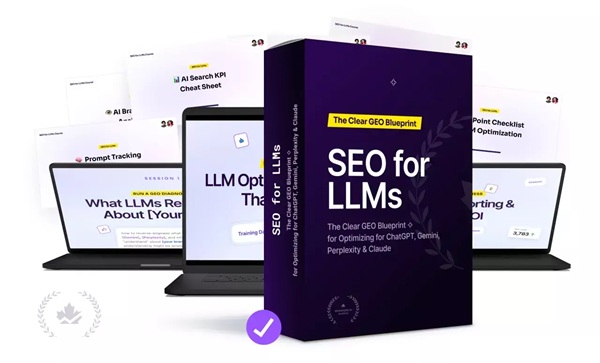
[GroupBuy] SEO For LLMs The GEO Blueprint – Kristina Azarenko
Original price was: $497.00.$25.00Current price is: $25.00.
- Delivery: You Will Receive A Receipt With Download Link Through Email.
- If you need more proof ofcourse, feel free to chat with me!

Description
As artificial intelligence continues to advance and reshape our digital landscape, the need for optimized strategies in navigating this new world becomes crucial. SEO For LLMs is not just an adaptation; it’s a necessity for brands wishing to maintain visibility and relevance within AI-driven environments. This article delves into the evolving framework of Generative Engine Optimization (GEO) and presents a comprehensive understanding for professionals who seek to stay ahead in the game.
SEO For LLMs
The emergence of Large Language Models (LLMs) like ChatGPT, Gemini, Perplexity, and Claude has revolutionized how users interact with information. As traditional search engine optimization (SEO) techniques become outdated, the transition to SEO For LLMs is both timely and essential for organizations aiming to thrive amidst rapid technological change.
Understanding LLMs is fundamental to grasping the future of search. In contrast to conventional search engines that primarily rely on keyword density and backlinks, LLMs focus on context, intent, and entity recognition. This marks a significant pivot from the historical SEO practices, requiring marketers to rethink their approaches entirely.
The Shift in Search Dynamics
With the advent of generative AI, the way users search for and process information has changed dramatically. Users are no longer just inputting keywords; instead, they are engaging in conversational interfaces, seeking comprehensive answers quickly. This new behavior necessitates a reevaluation of content strategies to align with these advanced technologies.
Traditional SEO relied heavily on optimizing for search engines’ algorithms, but as the landscape evolves, focusing solely on technical aspects may not suffice. Modern optimization should emphasize creating meaningful connections with users through conversational content that resonates with their needs. This approach can help brands build trust and foster long-lasting relationships with their audiences.
Emphasizing Entity-Based Optimization
One of the most significant shifts in SEO For LLMs is the move towards entity-based optimization. This strategy focuses on identifying and leveraging the entities relevant to a brand rather than relying solely on keyword-centric tactics. Understanding these entities—people, places, concepts, and things—enables brands to position themselves better in the conversation generated by LLMs.
Simply put, being recognized as an authoritative source requires brands to optimize their content around relevant entities. By doing so, organizations can ensure that their mentions and citations appear prominently in AI-generated responses, thereby maintaining visibility and authority in a crowded digital marketplace.
GEO Blueprint
The GEO Blueprint serves as a comprehensive guide for businesses transitioning from traditional SEO practices to Generative Engine Optimization. Crafted meticulously, the blueprint aims to provide structured methodologies for enhancing visibility and relevance in AI-driven environments.
The foundation of the GEO Blueprint lies in three critical phases: diagnostics, technical optimization, and measurement. Each phase encompasses specific strategies designed to help brands adapt to evolving digital landscapes while effectively managing their online presence.
Phase 1: Diagnostics and Brand Footprint Analysis
Before any optimization can take place, understanding how AI currently perceives a brand is paramount. The first phase emphasizes a thorough diagnostic analysis that identifies gaps in current visibility and control over the brand narrative.
Utilizing frameworks like RAPP (Recognition, Awareness, Perception, Positioning), brands can analyze citation gaps that inhibit their prominence in AI outputs. Moreover, assessing entity coverage ensures that the brand is positioned as a trustworthy source within its industry.
In this phase, organizations must also evaluate their AI footprint by determining what information is surfaced, what is ignored, and where inaccuracies exist. Identifying competitors within the generative space is vital for gauging success and defining strategic directions moving forward.
Phase 2: Technical Optimization and Content Structuring
Once diagnostics have provided clear insights, brands must focus on technical optimization tailored to LLM requirements. The evolution from traditional SEO to GEO involves understanding the specific response types employed by LLMs.
LLM response types are essential to consider; they include training data, retrieval-augmented generation, and deep-query systems. Crafting optimization strategies that resonate with these distinct processes helps ensure that content aligns with LLMs’ interpretive capabilities.
Content structuring is another key element of effective optimization. Organizing content to facilitate LLM interpretation allows these models to extract relevant information seamlessly. Utilizing tools like custom GPTs and Perplexity Pages can establish a competitive advantage, positioning brands favorably among peers.
Phase 3: Measurement, Tracking, and Proving ROI
A vital aspect of elevating SEO For LLMs is the ability to measure success and demonstrate return on investment (ROI). Traditional metrics like keyword rankings may be less applicable in the age of AI, necessitating a shift toward more relevant KPIs.
Key performance indicators for GEO revolve around LLM visibility share, citation growth, and tracking website traffic specifically attributed to AI search sources. By implementing sophisticated monitoring and reporting tools, organizations can translate technical outcomes into actionable business insights for stakeholders.
For example, analyzing bot log activity can illuminate which content is prioritized by LLMs, allowing teams to refine their strategies accordingly. Controlled experiments testing various optimizations can also yield valuable insights, guiding organizations toward successful implementations.
Kristina Azarenko
Notably, leaders in the field such as Kristina Azarenko have been pivotal in shaping the conversation around SEO For LLMs and the broader implications of generative engine optimization. Her insights and methodologies provide a framework for understanding how to navigate the complexities of AI-driven search environments skillfully.
Azarenko’s work emphasizes the importance of adapting to the changing tides of digital marketing. She advocates for a proactive approach that embraces innovation while leveraging foundational SEO principles. This blend of old and new strategies positions brands to thrive in an era defined by rapid technological change.
Navigating the Evolving Landscape
Adopting a forward-thinking mindset is crucial for SEO professionals today. Azarenko highlights the significance of staying informed about emerging trends in AI and how they influence user behavior. By recognizing these shifts, marketers can tailor their SEO strategies to meet evolving consumer expectations.
Additionally, she urges practitioners to cultivate adaptability and flexibility in their approaches. Given the dynamic nature of AI technologies, remaining agile enables marketers to pivot swiftly in response to new developments or challenges that arise in the market.
Building Trust and Authority
A core tenet of Azarenko’s philosophy revolves around the idea of building trust and authority in the eyes of both users and AI systems. Brands that prioritize transparency and authenticity are more likely to gain traction within generative search environments. This means crafting content that resonates with audiences and upholds the values instilled by the brand.
Through her teachings, professionals learn the importance of fostering meaningful engagement with consumers. Ultimately, establishing a strong rapport with users lays the foundation for positioning the brand as a reliable source in AI-generated responses. This credibility is paramount when vying for visibility in an increasingly competitive digital landscape.
Conclusion
In summary, the transition from traditional SEO to SEO For LLMs represents a paradigm shift in digital marketing strategies. By embracing the GEO Blueprint, brands can optimize their content and brand presence across leading LLM platforms. Influential figures like Kristina Azarenko highlight the importance of adapting to emerging technologies, underscoring the necessity of crafting meaningful connections with audiences while prioritizing trust and authority. As we navigate this new frontier, organizations that proactively implement these strategies will undoubtedly lead conversations and secure their relevance in a rapidly changing landscape.
Sales Page:_https://techseo.pro/llms-seo/
Delivery time: 12 -24hrs after paid
Related products
-
Sale!

[GroupBuy] Coach Kyle – Confidence and Self Mastery [November 2024]
Original price was: $125.00.$72.00Current price is: $72.00. -
Sale!
[GroupBuy] A.I. Revolution Bundle Faceless – A.I. Digital Creator Bundle
Original price was: $197.00.$19.00Current price is: $19.00. -
Sale!

[GroupBuy] Centerpointe – Secrets To Success And Making Money
Original price was: $197.00.$85.00Current price is: $85.00. -
Sale!

Dan Petty – Design Full-Time Bundle
Original price was: $350.00.$14.00Current price is: $14.00.
Reviews
There are no reviews yet.